Here is something I want you to know before we get into anything else. If detangling hurts your child, that is not just something they have to put up with.
Pain during detangling is almost always a sign that something in the process needs to change. The tool, the technique, the timing, the products, or all of the above.
It does not have to hurt and once you figure out the right approach for your child’s hair, you will be genuinely surprised at how different the whole experience becomes.
We have been building on each other’s posts here on Little Hair Book, and the last one we covered was weekly hair care routine for children which touched on where detangling fits into your week.
Now we are going deeper into the detangling process itself so you have everything you need to make it work.
Why Detangling the Wrong Way Causes So Much Damage
Before we talk about what to do, it helps to understand what is actually happening when you detangle the wrong way. Because the damage goes beyond just pain in the moment.
When you drag a comb through tangled hair from root to tip, you are forcing the comb through every single knot it meets along the way.
Each knot either breaks apart or the hair breaks. Most of the time, it is the hair that breaks. This is why so many children seem like their hair is not growing. It is growing but it is breaking off at the same rate or faster.
Repeated rough detangling also damages the hair cuticle. The cuticle is the outer layer of each strand of hair and it is what protects the inner structure.
When it gets roughed up consistently, the hair becomes weak, dull, and prone to even more tangling. It becomes a cycle that is hard to break.
Beyond the physical damage, there is an emotional side to this too. A child who associates hair care with pain will resist every single time.
That resistance makes the process harder, which leads to more rushing, which leads to more pain. Breaking that cycle starts with changing the technique.
You will love this: Children’s Hair Care Routine
The Golden Rule of Detangling
Always Start From the Ends, Never the Roots
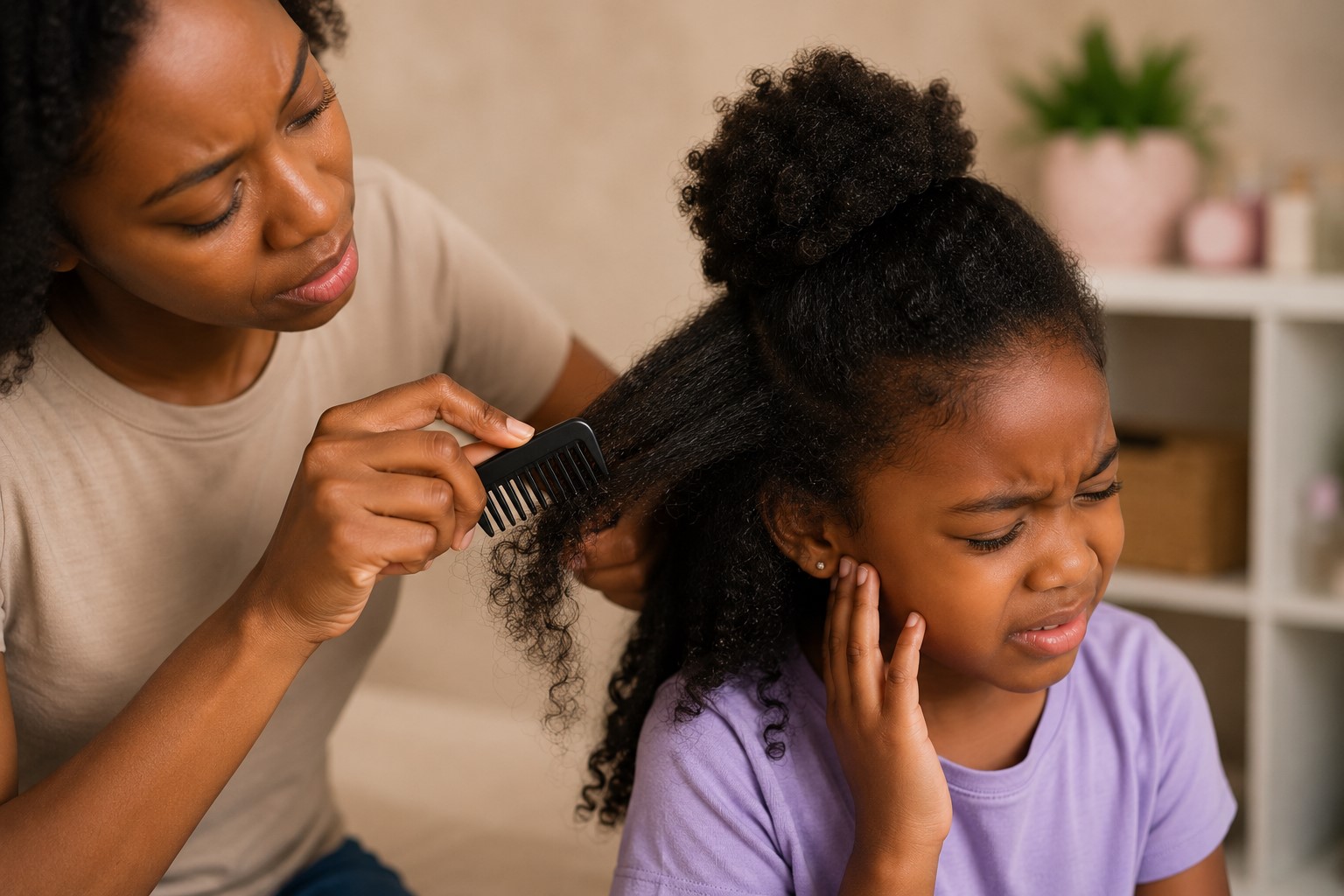
If there is one thing you take away from this entire post, let it be this. Always detangle from the ends of the hair and work your way up to the roots. Never the other way around.
When you start from the roots and drag downward, you are pushing every tangle toward the ends where they pile up and get tighter. By the time the comb reaches the ends it is fighting through a massive knot instead of smaller ones.
When you start from the ends, you are clearing the path one small section at a time. You remove the knot at the very tip first, then move slightly higher, then higher again.
By the time you reach the roots, the comb glides through because all the knots below have already been cleared.
This one change alone can transform your detangling sessions. It takes a little longer in the beginning because it feels counterintuitive.
But once you get used to it, it becomes second nature and the difference in your child’s comfort level will be immediate and obvious.
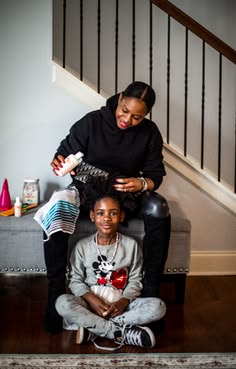
Detangling Dry Hair vs Wet Hair
This is a question that comes up a lot and the honest answer is that it depends on your child’s hair type.
Detangling dry hair works best for children with thick, natural, or coily hair. Type 4 hair in particular is much more fragile when it is wet because water causes the strands to swell and the curl pattern tightens.
Trying to detangle wet type 4 hair is harder and causes more breakage. Detangling it dry, with a good detangling spray or light oil to add slip, is gentler and more effective.
Detangling wet hair works better for children with wavy or looser curl patterns. These hair types are easier to work through when wet and conditioned.
The conditioner provides slip that helps the comb move through the hair without pulling.
The one time you should always detangle before washing, regardless of hair type, is right before wash day. We talked about this in the weekly routine post.
Detangling dry hair before it gets wet prevents the tangles from tightening when water hits them, which makes wash day so much smoother for everyone.
For more on how moisturizing connects to easier detangling, how to moisturize children’s hair on Little Hair Book explains exactly how keeping the hair moisturized between wash days reduces how bad the tangles get by the end of the week.
The Right Tools for Detangling
Choosing Between Fingers, Combs, and Brushes
The tools you use matter just as much as the technique. Using the wrong tool on the wrong hair type is one of the fastest ways to cause unnecessary pain and breakage.
Your fingers are always the best starting point. Before you bring in any tool, use your fingers to gently separate the hair and loosen the bigger knots.
Fingers give you the most control and the most sensitivity. You can feel a knot and work around it carefully instead of just forcing something through it.
Finger detangling is especially important for very tangled or very delicate hair.
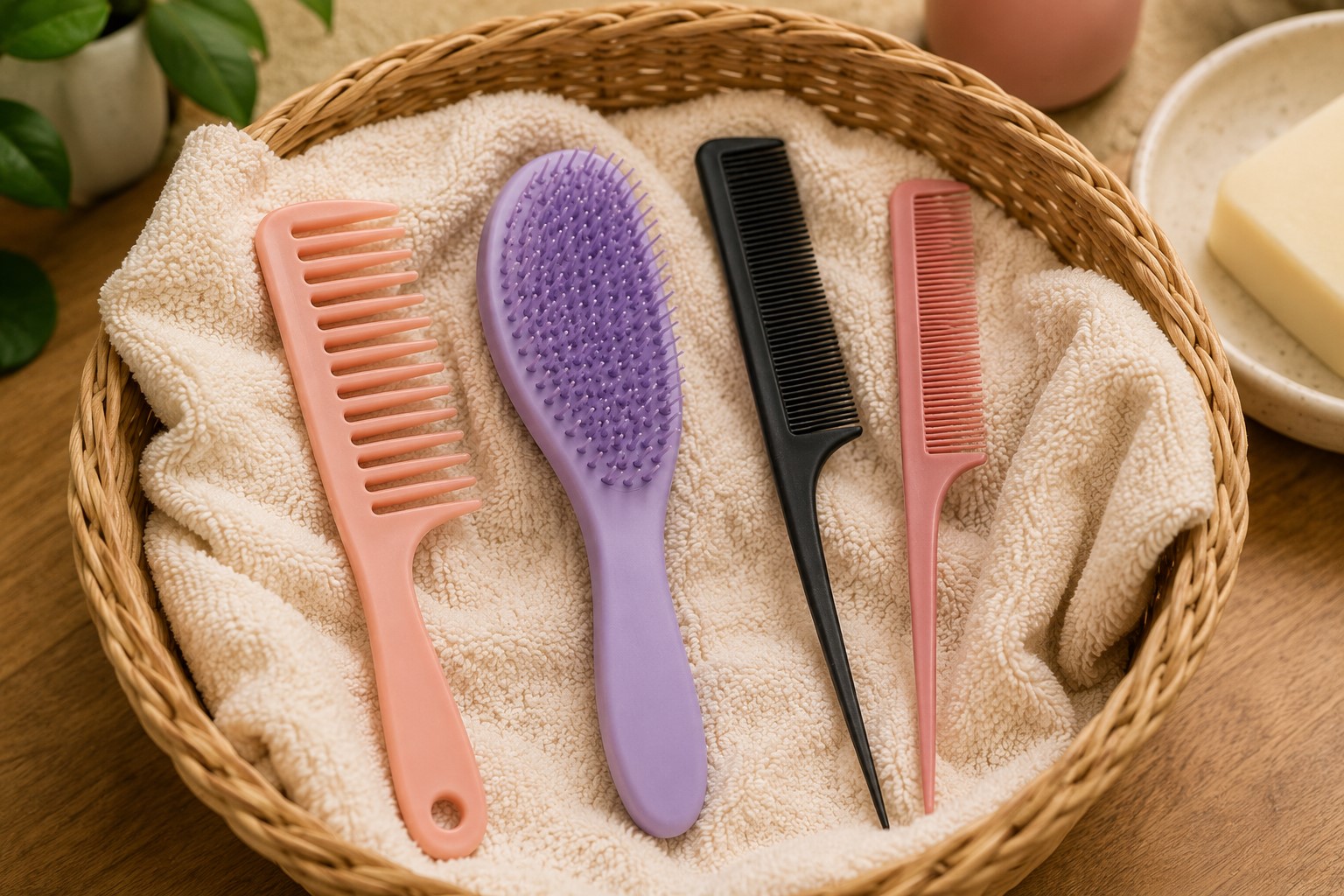
A wide-tooth comb is the gold standard for detangling children’s hair. The wide spaces between the teeth mean the comb does not snag on every single strand.
It moves through the hair more gently than a fine-tooth comb and is suitable for most hair types. Always use a wide-tooth comb for detangling, never a fine-tooth comb.
A detangling brush like a Tangle Teezer or a Denman brush can work well for wavy and curly hair types. These brushes have flexible bristles that bend around knots instead of pulling through them.
They are not ideal for very tight coily hair though. For type 4 hair, stick with fingers and a wide-tooth comb.
Fine-tooth combs should never be used for detangling. They are for smoothing and styling only, after the hair is already fully detangled.
Products That Make Detangling Easier
Trying to detangle without any product in the hair is one of the most common mistakes parents make. Dry hair has no slip. No slip means the comb catches on every strand and every tiny knot becomes a big painful ordeal.
You need something in the hair that creates slip. Slip is basically the slippery feeling that helps the comb glide through the hair instead of dragging.
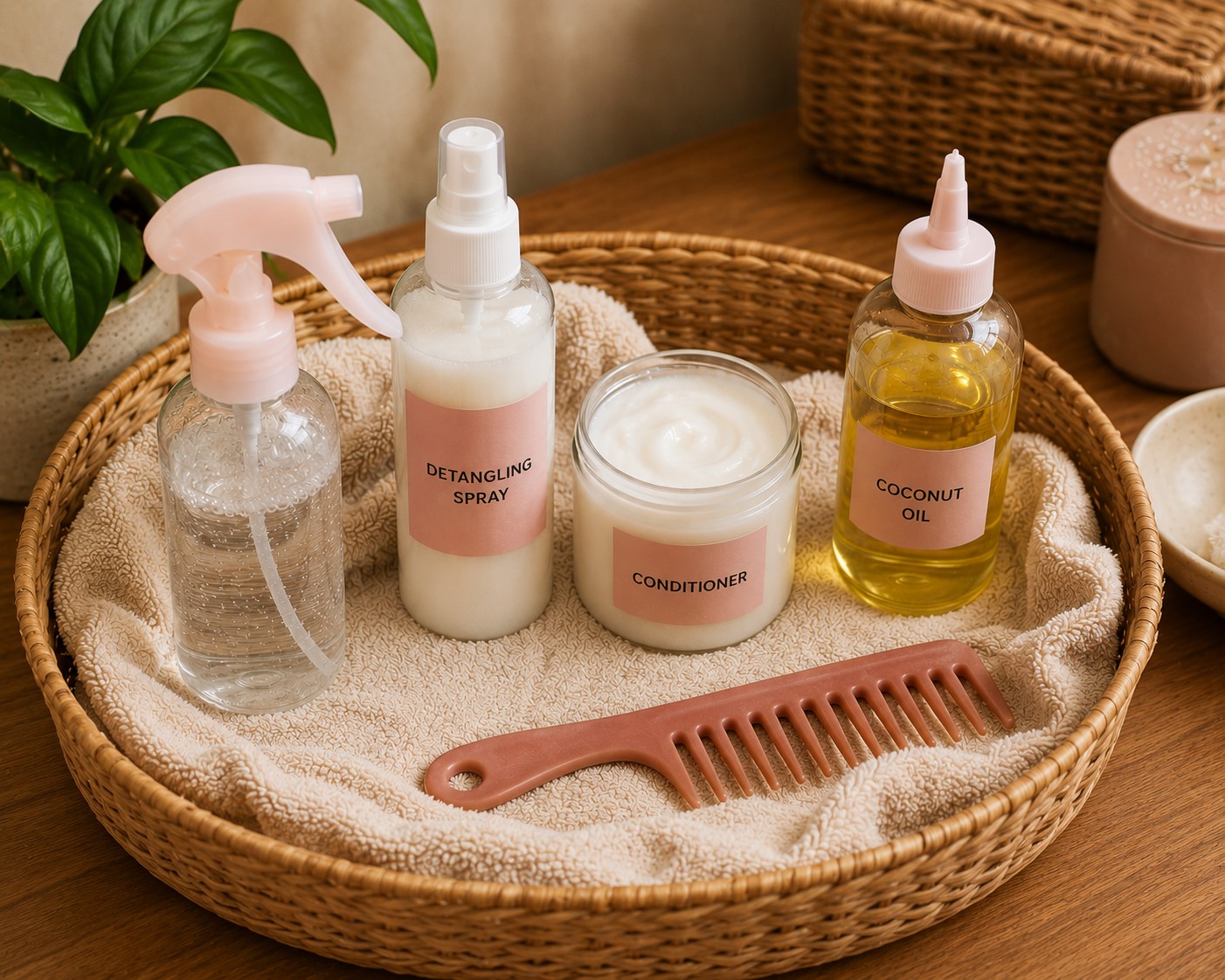
Water is the simplest option. Lightly misting the hair before detangling softens it immediately and makes it more pliable. For many children, especially those with wavy or curly hair, a water spray alone makes a significant difference.
Detangling spray is water with added slip agents. You can buy a ready-made one or make a simple version at home by mixing water with a small amount of leave-in conditioner in a spray bottle.
Spray it on the section you are working on, let it sit for a few seconds, then begin detangling.
Conditioner provides the most slip of all. This is why detangling in the shower with conditioner still in the hair works so well for many children.
The conditioner coats each strand and lets everything slide apart instead of catching and pulling.
Oil can be added on top of water or conditioner for extra slip. Coconut oil and olive oil work particularly well for this.
Whatever product you choose, apply it generously to the section you are working on before you bring in any tool. Reapply as you move to new sections. Do not try to detangle a dry section even if the sections around it are already done.
For more on building the right daily habits that keep tangles manageable, daily hair care for kids on Little Hair Book is a great read alongside this one.
How to Detangle Step by Step
Now let us put it all together into a process you can actually follow.
Divide the hair into sections: Do not try to detangle all the hair at once. Part the hair into four sections minimum. For very thick or long hair, use more sections. Clip or twist each section to keep them separate while you work.
Start with one section and mist it lightly with water or detangling spray: Make sure the whole section is damp but not soaking wet.
Apply your conditioner or leave-in conditioner to the section: Work it through with your fingers from ends to roots.
Use your fingers to gently separate the hair and loosen any big knots: Be patient here. Do not rush this step. The more work your fingers do, the less work the comb has to do.
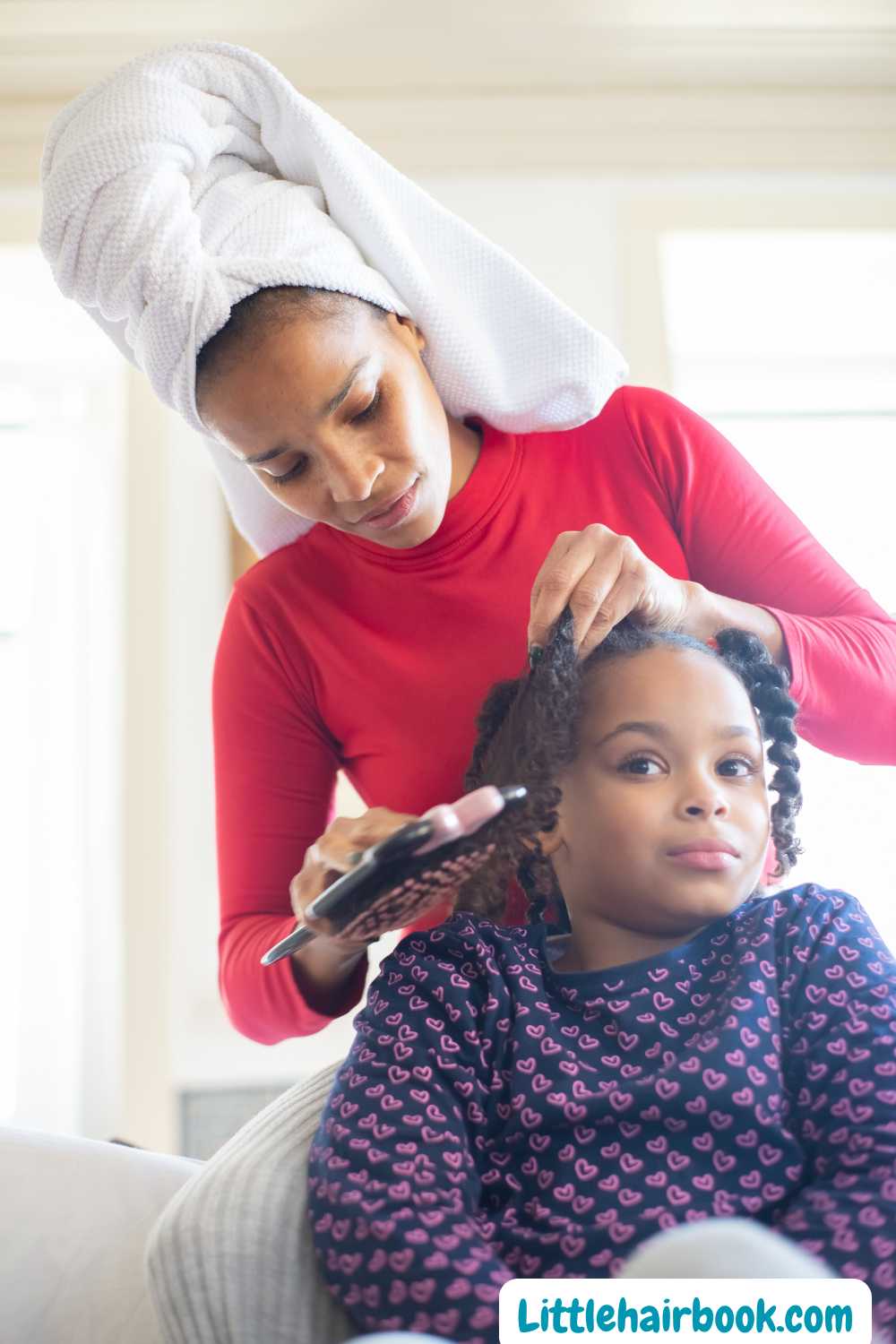
Take your wide-tooth comb and start at the very ends of the section: Hold the hair above where you are combing with your other hand.
This is important. Holding the hair prevents the pulling feeling from reaching the scalp. Comb through the ends until they are smooth, then move a little higher up the section. Keep going until you reach the roots.
Once the section is fully detangled, twist or braid it and move on to the next section: Do not leave detangled sections loose while you work on others. They will just tangle again.
Repeat for every section until all the hair is done.
You will not want to miss this: How to Wash Children’s Hair Properly
What to Do When You Hit a Stubborn Knot
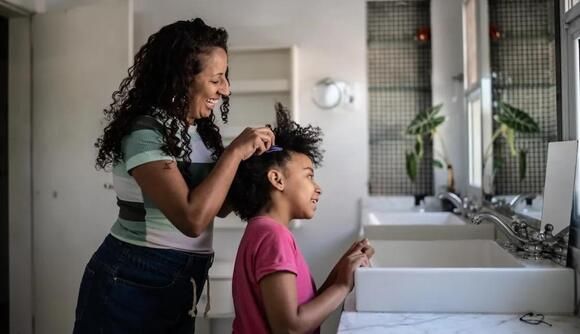
Every now and then you will hit a knot that just will not budge. Do not force the comb through it. Stop, put the comb down, and go back to your fingers.
Hold the hair just above the knot with one hand and use the fingers of your other hand to gently tease the knot apart from the outside in.
Work slowly and patiently, most knots can be loosened with enough patience and the right amount of slip.
If the knot absolutely will not come out without causing significant breakage, it may be better to carefully cut it out.
This sounds dramatic but one small snip is better than tearing through the hair and causing breakage that travels further up the strand.
Bookmark this post: How to Care for Natural Children’s Hair
How Often Should You Detangle?
The answer to this depends on your child’s hair type and what style the hair is in.
For children with straight or wavy hair that is worn loose, daily gentle detangling is usually necessary to prevent buildup of tangles overnight.
For children with natural or coily hair in a protective style, you may only need to detangle fully on wash day and then do light finger detangling during the week as needed.
Detangling too frequently can actually cause more breakage for this hair type because the hair is so fragile.
The goal is to detangle as often as needed but as infrequently as possible. Protective styles help with this enormously because they keep the hair contained and reduce the tangles that form from daily movement and friction.
Pin this post: How to Comb Children’s Hair Without Tears
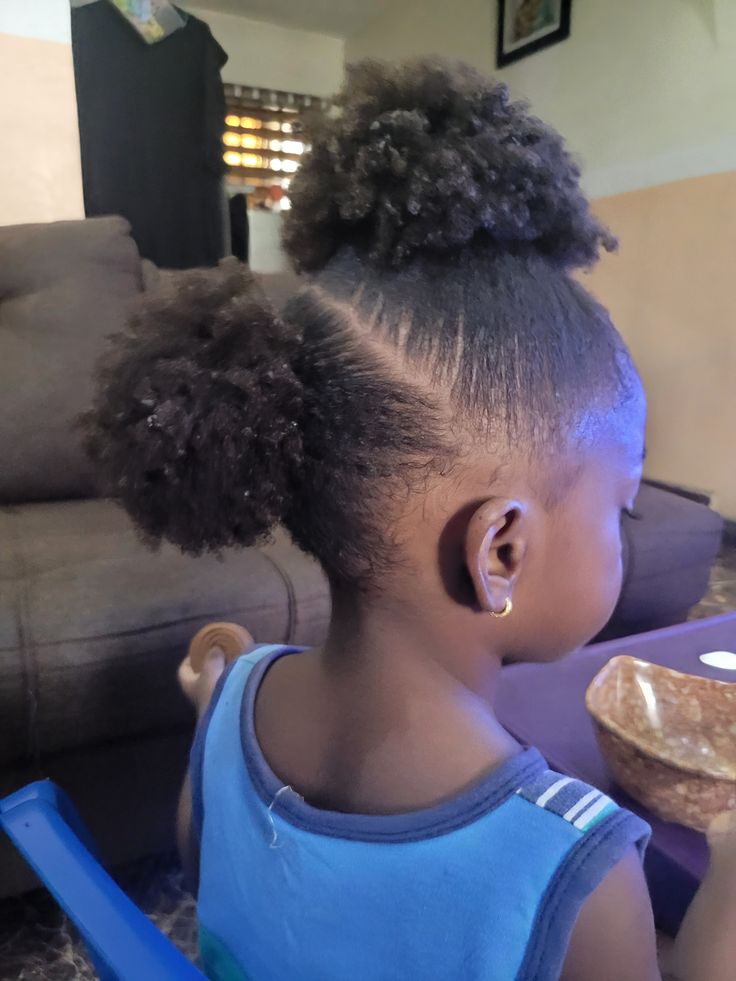
Making Detangling Less Stressful for Your Child
Creating a Calm Environment
The environment you detangle in matters more than you might think. If you are tense and rushing, your child feels that energy and tenses up too.
A tense child means tighter muscles in the scalp area, which actually makes the hair feel more sensitive to pulling.
Create a calm space for detangling. Put on something your child loves to watch or listen to. Make sure they are comfortable, whether that is sitting between your knees, in a chair, or on the floor. Have everything you need within reach so you are not stopping and starting.
Keep your voice calm and reassuring as you work. If your child tells you something hurts, stop and adjust. Do not push through pain. It destroys trust and makes every future session harder. Instead, add more product, change your technique, or take a short break and come back to it.
Praise them as you go. “You are doing so well.” “Almost done with this section.” “Your hair is looking so beautiful.” Children respond to encouragement and it keeps them engaged and cooperative through the whole process.
As you get more comfortable with detangling, the next step is making sure you are also brushing the hair correctly during styling sessions. How to brush children’s hair on Little Hair Book covers the brushing side of things in just as much detail as we have covered detangling here.
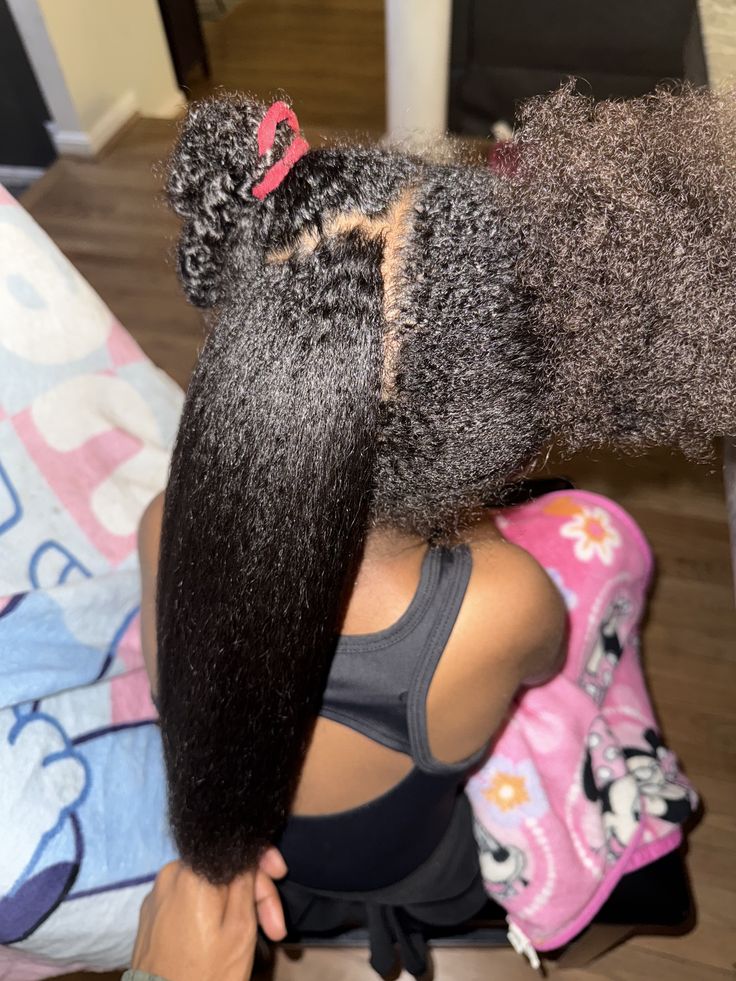
Preventing Tangles From Getting Bad in the First Place
The best detangling session is one you barely have to do because you prevented the bad tangles from forming. Prevention is always easier than fixing.
Keep the hair in protective styles: Loose hair tangles so much faster than hair that is in braids or twists. The more the hair moves freely, the more it rubs against itself and against clothing, pillowcases, and car seat headrests. Keeping it contained significantly reduces how tangled it gets.
Never skip the satin bonnet at night: We have said this in almost every post and we will keep saying it. Cotton causes friction, friction causes tangles, satin eliminates that friction. A bonnet at night is one of the single most effective tangle prevention tools you have.
Keep the hair moisturized: Dry hair tangles much more easily than moisturized hair. When the hair is well moisturized, the strands slide past each other instead of catching and knotting. This is why your moisturizing routine and your detangling routine are so closely connected.
Do not leave hair loose and unprotected for long periods: When your child is playing outside, swimming, or doing anything very active, consider putting the hair in a protective style first. Wind, water, and physical activity are some of the biggest causes of severe tangling.
For children with curly hair specifically, tangle prevention looks a little different and needs some extra thought around how the curls are handled day to day. How to care for curly children’s hair on Little Hair Book goes into all of that in detail so you have exactly what you need for your child’s specific hair type.
A Final Word on Patience
Detangling is one of those things that genuinely gets easier the more you do it. The first few times you follow these steps, it might still feel slow and a little uncertain.
That is okay you are learning your child’s hair. You are learning what products work, what technique they respond to best, and how much time you need.
Give yourself grace through that learning curve. And give your child grace too. If they cried through detangling for years, they are not going to trust the new process immediately.
Keep showing up gently and consistently, Keep communicating. Keep making it as comfortable as possible.
Over time, the screaming becomes whimpering. The whimpering becomes silence and eventually, silence becomes your child sitting calmly while you work through their hair, maybe even chatting with you about their day.
That moment is coming. Keep going.