Natural hair is beautiful, but every parent raising a child with natural hair knows it comes with its own challenges. One of the biggest is shrinkage, that frustrating moment when it seems like your child’s hair isn’t growing, even though it actually is.
The dryness that comes back two days after you just moisturized. The detangling sessions that feel like they take forever. The styles that look perfect on someone else’s child but somehow do not work the same way on yours.
None of that means you are doing it wrong. It just means natural hair has specific needs and once you understand what those needs are, everything gets easier. A lot easier.
We covered curly hair care in the last post on Little Hair Book and if you have not read it yet, how to care for curly children’s hair is worth checking out because some of what applies to curly hair applies here too. But natural hair, particularly type 4 hair, has its own unique characteristics that deserve their own dedicated guide. That is exactly what this post is.
What Makes Natural Hair Different From Other Hair Types
Natural hair, specifically type 4 hair, is the most fragile hair type there is. That might sound surprising given how thick and full it looks. But the tightness of the coil is exactly what makes it fragile.
Each strand of type 4 hair has multiple bends and curves along its length. Every one of those bends is a point of weakness where the hair can break if it is handled roughly. This is why natural hair breaks so easily when it is dry or when it is combed without enough product.
Natural hair also has the highest level of shrinkage of any hair type. Shrinkage is when the hair appears much shorter than it actually is because the coils contract.
Type 4C hair can shrink up to 75 percent of its actual length. So a child whose hair looks like it is two inches long might actually have eight inches of hair. Shrinkage is normal and healthy. It is a sign of a good moisture level and an intact curl pattern.
Understanding these two things, fragility and shrinkage, changes how you approach everything from washing to styling to daily maintenance.
The Most Important Thing Natural Hair Needs
Moisture. Full stop.
Natural hair is naturally dry because the tight coil pattern makes it almost impossible for the scalp’s natural oils to travel down the hair shaft the way they do with straighter hair types.
The oils get stuck near the roots and the rest of the hair, especially the ends, stays dry unless you are actively and consistently adding moisture.
This is not a one-time fix. It is an ongoing commitment. Natural hair needs moisture added regularly and it needs that moisture sealed in properly so it does not evaporate within a day or two.
Everything else we are going to talk about in this post, the washing, the styling, the protective styles, all of it is built around this one central need. Keep the hair moisturized and you have already solved most of the problems that come with natural hair.
For a detailed breakdown of how to moisturize properly including the LOC method and product choices, how to moisturize children’s hair on Little Hair Book is exactly what you need alongside this post.
Understanding Type 4 Hair
Type 4 hair is broken down into three subcategories and knowing which one your child has helps you tailor your approach.
Type 4A has a defined coil pattern that looks like tight springs. When stretched, each coil snaps back into shape. This type holds moisture a little better than the other type 4 categories and has some visible curl definition when moisturized well.
Type 4B has a zigzag pattern rather than a defined coil. The strands bend at sharp angles instead of forming smooth spirals. It has less definition than 4A and shrinks significantly. It needs consistent moisture and gentle handling.
Type 4C is the tightest and most fragile of all. It has very little to no visible curl definition and the highest shrinkage of any hair type. It is also the most prone to dryness and breakage. Type 4C hair needs the most moisture, the gentlest handling, and the most protective styling of all the hair types.
Your child may have a mix of these types across their head and that is completely normal. The crown might be 4C while the edges and nape are 4B. Treat each section according to what it needs.
Bookmark this post: How to Brush Children’s Hair
How to Wash Natural Hair
Getting Wash Day Right From the Start
Wash day for natural hair is the most involved part of the routine but it is also the most important. Done right, it sets the hair up beautifully for the whole week ahead.
Before you even turn on the tap, detangle the hair completely while it is dry. This is non-negotiable for natural hair. Wet tangles in type 4 hair are extremely difficult to remove and can cause significant breakage. Spend as much time as you need finger detangling and combing through the hair in sections before washing.
Apply a pre-poo treatment before washing. This is an oil or conditioner applied to the hair before shampooing to protect it from losing too much moisture during the wash.
Coconut oil, olive oil, or a store-bought pre-poo treatment all work well. Apply it generously, cover with a plastic cap, and leave it on for at least thirty minutes before washing. We covered this in detail in the weekly hair care routine for children post on Little Hair Book.
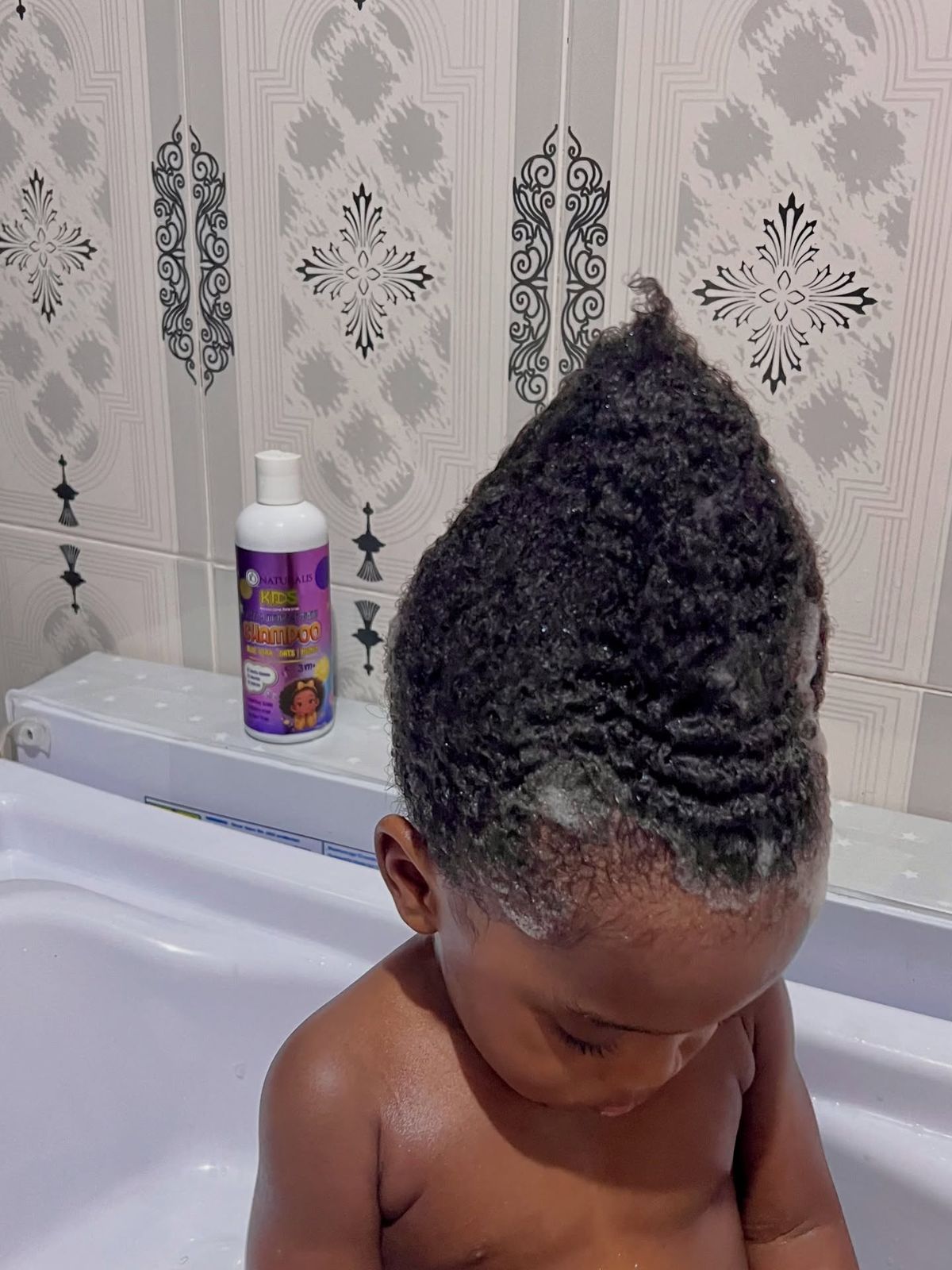
Wash the hair in sections. Divide the hair into four to six sections, loosely braid or twist each one, and wash one section at a time. This prevents the hair from tangling during the wash and makes the whole process much more manageable.
Use a gentle sulfate-free shampoo. Sulfates are too harsh for natural hair and strip it of the moisture it so desperately needs.
Apply the shampoo to the scalp, massage gently with your fingertips, and let it rinse down through the braided section. Do not unravel the sections during washing.
How Often Should You Wash Natural Hair
For most children with natural hair, washing every one to two weeks is the right frequency. Washing too often strips the hair of its natural oils and causes dryness.
But waiting too long allows product buildup and sweat to accumulate on the scalp which can cause itching and an unhealthy scalp environment.
Pay attention to your child’s scalp. If it starts to feel itchy or look flaky before your next scheduled wash day, go ahead and wash. If the hair still feels clean and moisturized, you can wait a few more days.
Pin this post: How to Comb Children’s Hair Without Tears
Deep Conditioning Natural Hair
Deep conditioning is the single most transformative step in any natural hair routine. It is not optional. It is what keeps natural hair soft, strong, and manageable between wash days.
After shampooing, unravel each section and apply deep conditioner generously from roots to ends. Make sure every strand is coated.
Put a plastic cap on and leave it on for at least thirty minutes. For very dry or damaged hair, leave it on longer. An hour is not too long for a deep conditioner on natural hair.
Use heat during the deep conditioning process. Heat opens the hair cuticle and allows the conditioner to penetrate deeper into the hair shaft. A hooded dryer is ideal but sitting under a warm towel or in a steamy bathroom works too.
Rinse with cool water to close the cuticle back up and seal in the moisture from the conditioner.
Choose a deep conditioner that contains ingredients like shea butter, coconut oil, avocado, or honey. These ingredients are particularly nourishing for natural hair and help restore softness and elasticity.
Moisturizing and Sealing Natural Hair
After deep conditioning and rinsing, the hair needs to be moisturized and sealed before styling. This is where the LOC method comes in and it works especially well for natural hair.
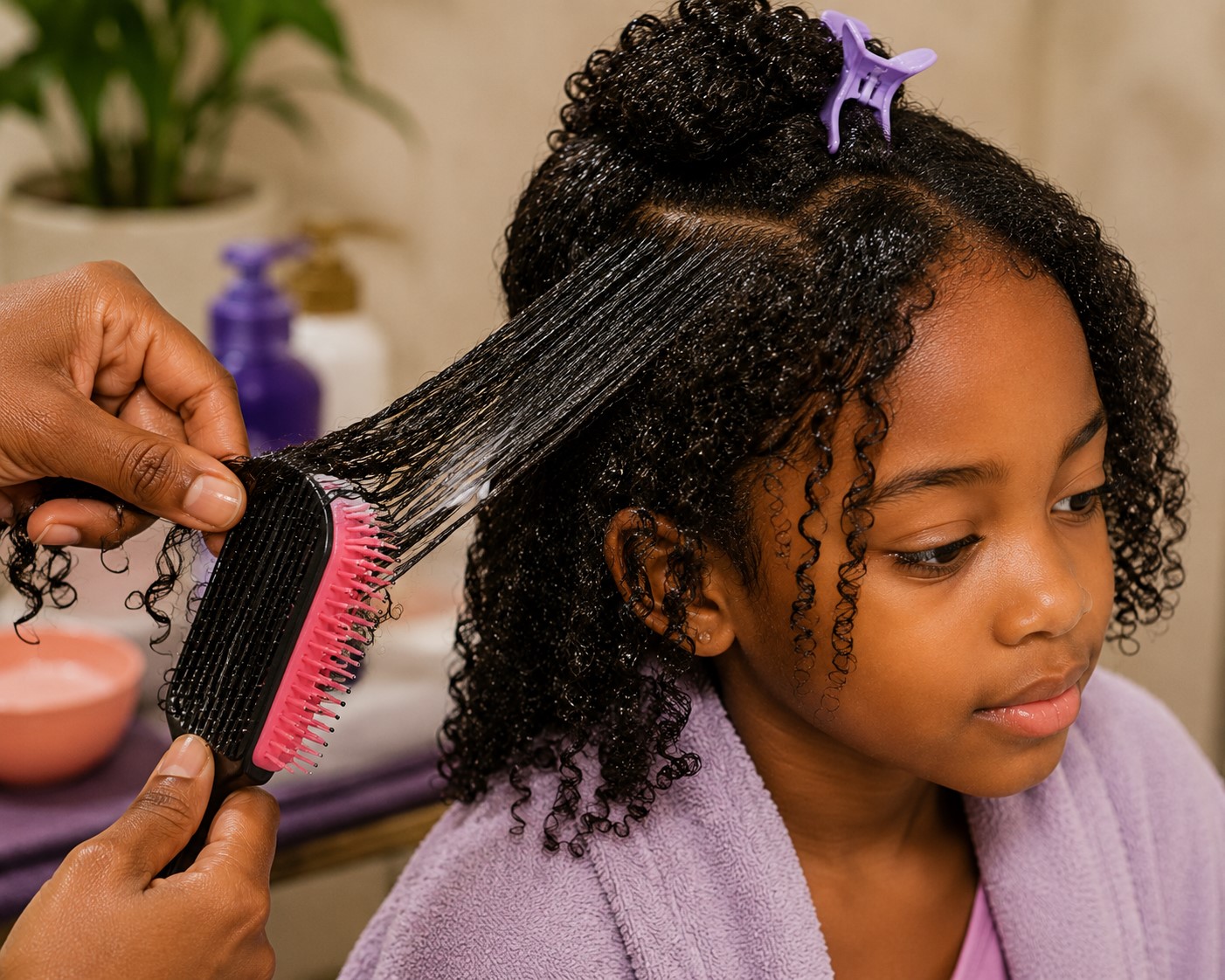
Liquid: Apply a water-based leave-in conditioner to each section while the hair is still damp. Water is the true moisturizer and the leave-in helps it stay in the hair longer.
Oil: Seal the moisture in with an oil. For natural hair, heavier oils like castor oil, jamaican black castor oil, or coconut oil work best because they provide a stronger seal. Mix castor oil with a lighter oil like jojoba if it feels too thick on its own.
Cream: Finish with a shea butter-based cream or hair butter to add another layer of sealing and to help with softness and definition.
Work through the hair one section at a time. Make sure every section is fully coated before moving on to the next one. Then style the hair into your chosen protective style before it dries completely.
Check this out: How to Wash Children’s Hair Properly
Protective Styles for Natural Hair
Why Protective Styles Are Everything for Natural Hair
Protective styling is one of the most important tools you have for maintaining natural hair. When natural hair is left loose and unprotected, it is constantly exposed to friction, dry air, and manipulation.
All of that causes dryness and breakage. Protective styles keep the ends of the hair tucked away and reduce how much the hair is handled daily.
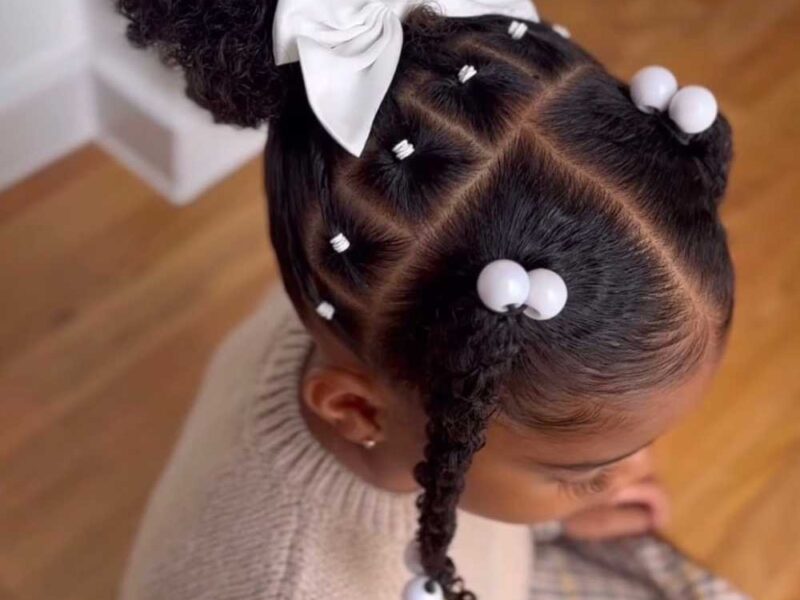
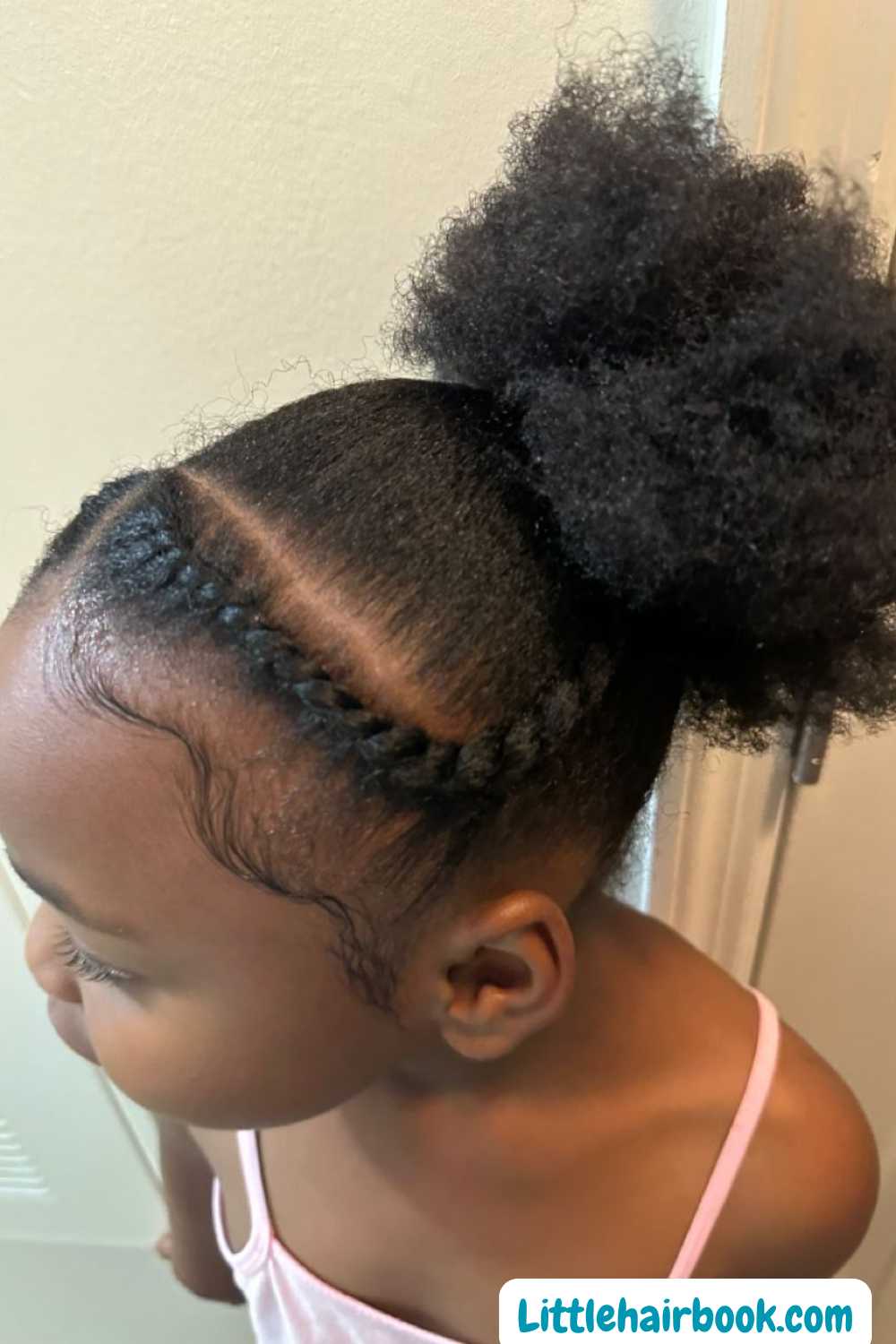
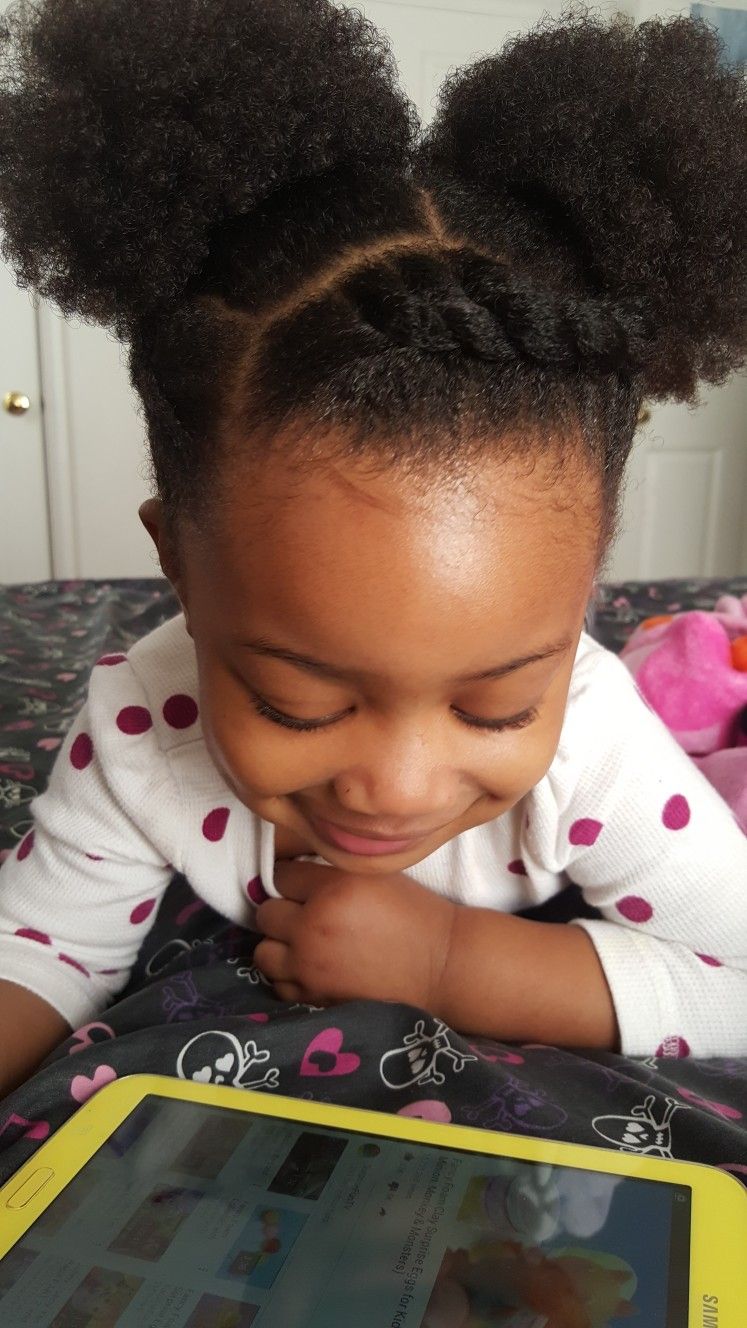
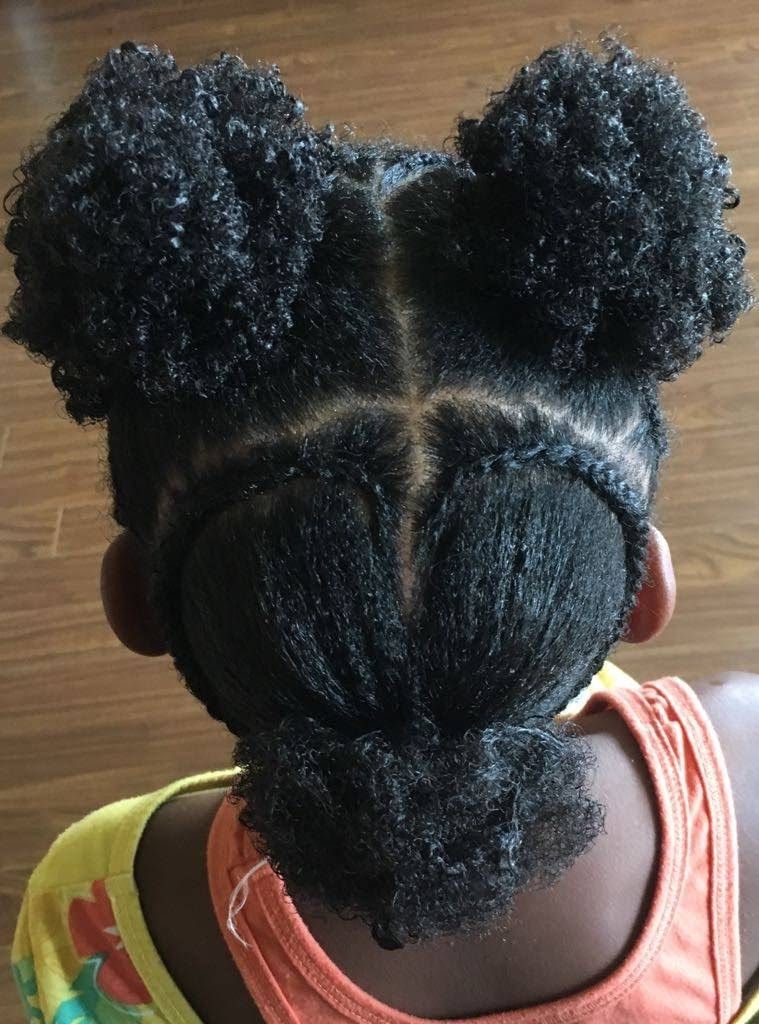
Great protective styles for children with natural hair include braids, cornrows, twists, bantu knots, and flat twists. These styles can last anywhere from a few days to a few weeks depending on how well you maintain them.
When putting the hair into any protective style, make sure it is not too tight. Tight styles pull on the edges and hairline and can cause traction alopecia over time.
The style should feel comfortable immediately after it is done. If your child is complaining that it feels tight, loosen it.
Keep the hair moisturized even while it is in a protective style. Lightly mist the hair with water every few days and apply a light oil to the scalp to prevent dryness and itching. The hair underneath the style still needs attention even though you cannot see it.
Caring for the Edges and Hairline
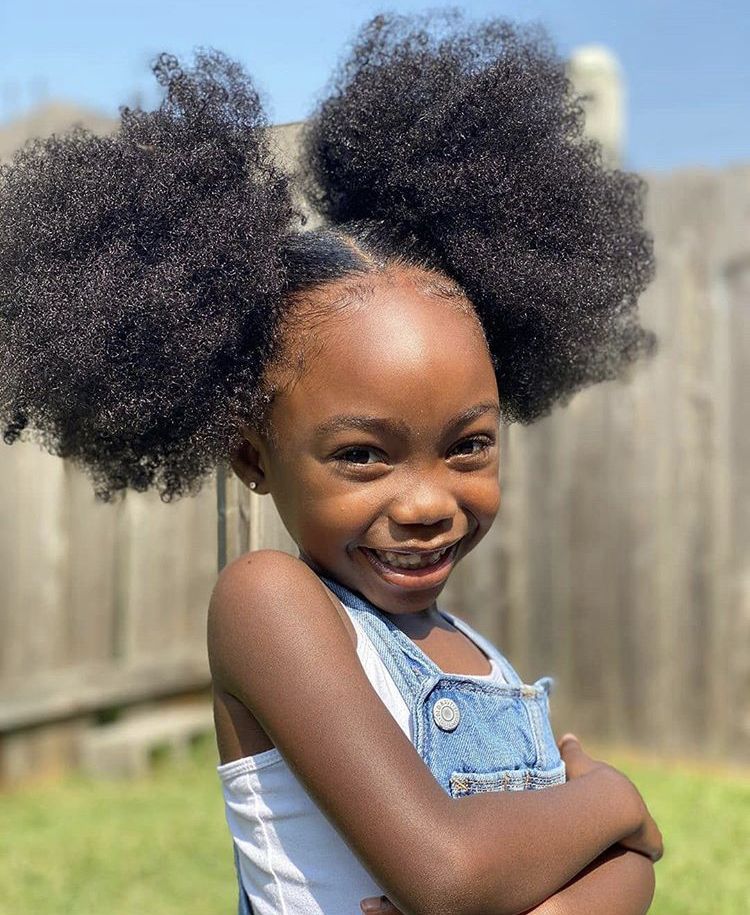
The edges are the most delicate part of natural hair. The hair along the hairline is finer and more fragile than the rest of the hair and it is also the most visible. Taking care of the edges needs to be a specific and intentional part of your routine.
Never put the edges in a style that is too tight. This is the number one cause of edge loss in children with natural hair. Tight ponytails, tight cornrows that start right at the hairline, and tight braids pulling on the edges all damage the follicles over time.
Keep the edges moisturized daily. Apply a small amount of edge control or a light cream to the edges every morning and smooth them down with a soft bristle brush. Use gentle circular motions and apply almost no pressure.
Give the edges a break from styling regularly. If the edges have been in cornrows for a few weeks, let them rest before putting them back into another tight style.
Alternating between styles that pull on the edges and styles that leave them free helps the hairline stay healthy.
If you notice the edges starting to thin or recede, stop any style that is putting tension on that area immediately and focus on moisturizing and gentle care until they recover.
For more on how to handle the edges during your daily routine, daily hair care for kids on Little Hair Book covers the morning and evening steps for keeping the edges looking healthy every day.
Detangling Natural Hair Without Breakage
Detangling is one of the trickiest parts of caring for natural hair. Type 4 hair tangles easily and the tangles can get very tight, especially if the hair has been in a protective style for a while or if it has been neglected for a few days.
Always detangle natural hair when it is damp and loaded with product. Never try to detangle dry natural hair without any slip. The strands will snap before the knot gives way.
Work in very small sections, the thicker and coilier the hair, the smaller the sections need to be. Small sections give you more control and reduce the tension on any single strand.
Finger detangle first before any tool touches the hair. Use your fingers to separate the coils and loosen the knots gently. Only bring in a wide-tooth comb after your fingers have done the initial work.
Hold the hair above where you are working at all times. This protects the scalp from feeling the tension and makes the whole process more comfortable for your child.
For a complete step-by-step detangling guide, how to detangle children’s hair on Little Hair Book covers everything from tools to technique in full detail.
Building a Natural Hair Routine That Actually Works
A routine is what ties everything together. Without one, natural hair care becomes reactive instead of proactive. You are always dealing with problems instead of preventing them.
Here is a simple framework to build from.
Daily: Mist the hair lightly, apply a small amount of leave-in or oil to any dry areas, smooth the edges, and put the hair in a protective style or bonnet for sleep.
Midweek: Do a proper moisture refresh. Mist, apply leave-in, seal with oil, check the scalp and apply oil if needed.
Weekly or biweekly: Full wash day including pre-poo, shampoo, deep condition, moisturize with the LOC method, and style into a fresh protective style.
Monthly: Trim the ends, do a scalp check, clarify if there is buildup.
Stick to this framework consistently and adjust as you learn what your child’s hair specifically responds to. Natural hair care is not one size fits all. The framework is the same but the products and timing will be unique to your child.
For a deeper look at how to build this routine week by week, children’s hair care routine on Little Hair Book walks through every layer of the routine in detail.
Common Natural Hair Mistakes to Avoid
Even parents who are trying their best can fall into habits that are quietly setting their child’s hair back. Here are the most common ones.
Skipping deep conditioning: Regular conditioner is not enough for natural hair. Deep conditioning every wash day is what keeps the hair strong and manageable.
Using products with sulfates, mineral oil, or petrolatum: Sulfates strip moisture. Mineral oil and petrolatum coat the hair without actually moisturizing it and they build up quickly. Read your labels and avoid these ingredients in your child’s hair products.
Washing too often: Natural hair does not need weekly shampooing. Once every one to two weeks is enough for most children. Washing too frequently strips the hair and causes chronic dryness.
Leaving the hair in a style for too long: Protective styles are great but leaving them in for weeks without proper maintenance causes matting, dryness, and breakage. Take down and redo protective styles every two to four weeks at most.
Handling the hair roughly when it is dry: Dry natural hair snaps easily. Always add moisture before any handling, whether that is detangling, styling, or even just checking on the hair.
Neglecting the ends: The ends of natural hair are the oldest and most fragile part. They need the most moisture and the most protection. Always pay extra attention to the ends when moisturizing and always keep them tucked away in a protective style.
Celebrating Your Child’s Natural Hair
This matters more than any product or technique. The way you talk about your child’s natural hair shapes how they feel about it as they grow up.
When you handle their hair with care and intention, when you celebrate its thickness and its texture and its volume, when you show them that their hair is something worth taking care of, you are giving them something that goes far beyond a good hair day. You are giving them pride in who they are.
Natural hair is not a problem to be managed. It is a crown to be celebrated. Treat it that way every single wash day, every single daily refresh, every single detangling session, and your child will grow up knowing exactly how beautiful and worthy their hair is.