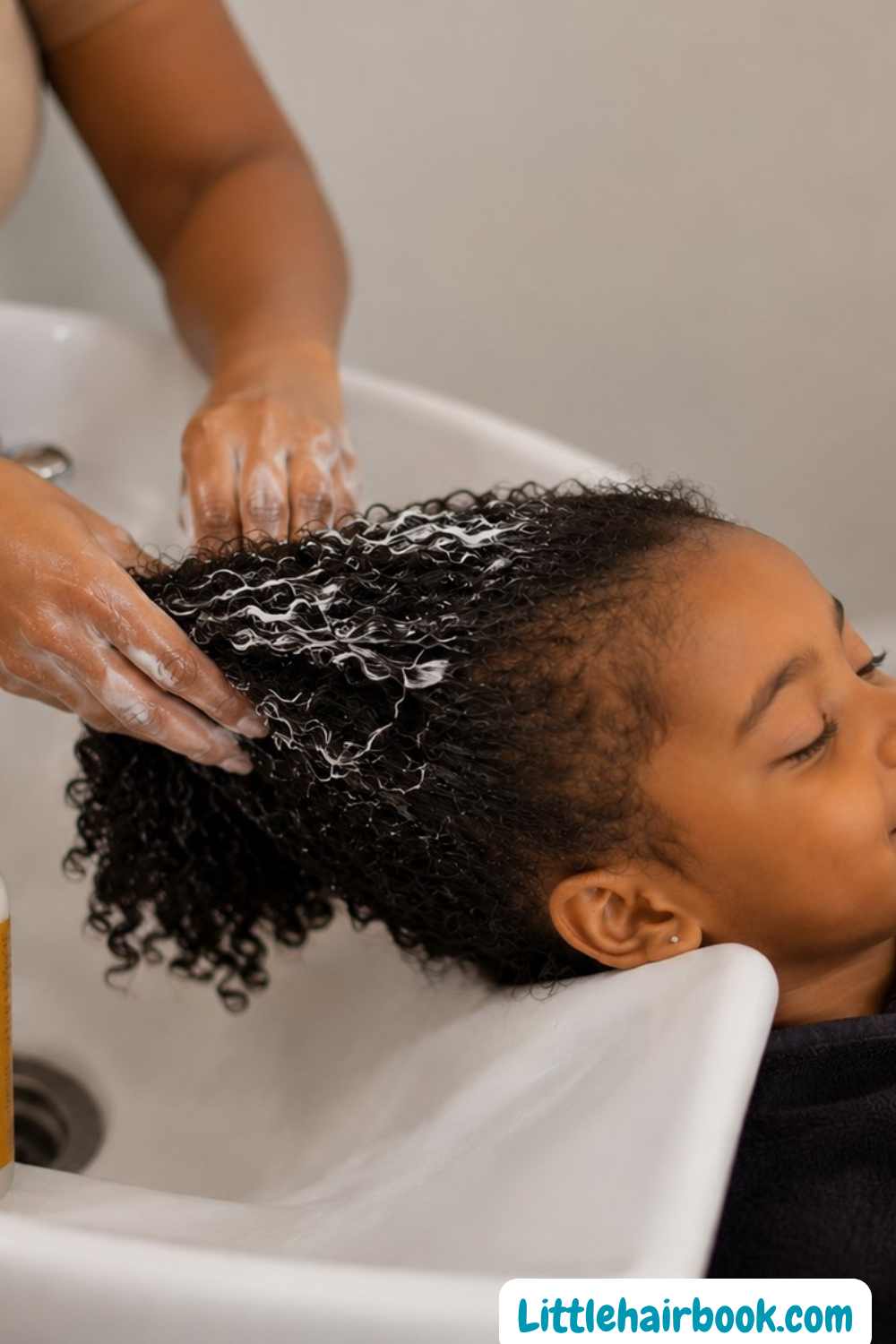
Healthy, soft, and manageable hair starts with the right conditioner. A good conditioner helps keep your child’s hair moisturized, reduces tangles, prevents breakage, and makes combing and brushing much easier. It also protects the hair from becoming dry and frizzy, making daily hair care less stressful for both parents and children.
Yet conditioner is the step that so many parents rush through or skip entirely. They shampoo thoroughly, rinse, and then move straight to styling and then they wonder why the hair feels dry and breaks easily and tangles so badly between wash days.
The conditioner is doing more work than most people give it credit for and choosing the right one for your child’s hair type makes a genuinely significant difference in hair health over time.
We talked about shampoo in the last post on Little Hair Book and if you have not read it yet, best shampoo for children is worth going through before this one because shampoo and conditioner work as a pair. Today we are going deep into conditioners.
In this guide, you’ll discover the best conditioner for kids, learn what ingredients to look for and avoid, and get practical tips for choosing the right conditioner for your child’s hair type. By the end, you’ll have everything you need to keep your child’s hair soft, healthy, and easy to manage every day.
What Conditioner Actually Does for Your Child’s Hair
A lot of parents think of conditioner as something that just makes the hair soft for a few minutes during the wash. But it is doing so much more than that.
Shampoo cleans the hair by opening the hair cuticle to remove dirt and oil. This is necessary but it also leaves the cuticle rough and raised after rinsing.
Raised cuticles are what make hair feel rough and look dull after washing. They also make the hair more vulnerable to breakage because the inner structure of the strand is less protected.
Conditioner works by smoothing those raised cuticles back down. It coats each strand with ingredients that flatten the cuticle, seal in moisture, and add a layer of protection. The result is hair that feels softer, looks shinier, detangles more easily, and is significantly more resistant to breakage.
Beyond just the immediate softness, regular conditioning keeps the hair’s moisture levels balanced over time. Hair that is consistently conditioned properly becomes stronger and more elastic.
It stretches before it breaks rather than snapping, which means less breakage and more length retention over weeks and months.
For more on why moisture retention is so central to healthy children’s hair, how to moisturize children’s hair on Little Hair Book explains the whole picture beautifully.
The Difference Between Regular Conditioner and Deep Conditioner
These are two different products that serve different purposes and most children need both as part of their routine.
Regular conditioner is also called rinse-out conditioner. You apply it after shampooing, leave it on for a few minutes, and rinse it out.
It provides immediate softness and slip for detangling. It is used every single wash day without exception.
Deep conditioner is a more intensive treatment. It has a higher concentration of moisturizing and strengthening ingredients that penetrate deeper into the hair shaft.
You leave it on for fifteen to thirty minutes, usually with heat, before rinsing. It is used once a week or every two weeks depending on the hair type.
For children with straight or fine hair, a good regular conditioner used consistently is usually enough. Deep conditioning once or twice a month is sufficient for maintaining healthy hair.
For children with curly, natural, or very dry hair, deep conditioning every single wash day is not excessive.
These hair types lose moisture so quickly that the regular rinse-out conditioner alone is not enough to keep up with their needs between washes.
Ingredients to Look for in a Children’s Conditioner
What Makes a Conditioner Actually Work
Knowing what to look for on the ingredient list helps you tell the difference between a conditioner that is genuinely nourishing and one that just smells nice and feels slippery for a moment before doing nothing for the hair long term.
Humectants draw moisture from the air into the hair shaft. Glycerin, honey, and aloe vera are the most common humectants in conditioners.
They are especially valuable in humid climates where there is moisture in the air for them to draw in.
Emollients smooth and soften the hair by filling in gaps in the hair cuticle. Shea butter, coconut oil, avocado oil, and argan oil are all emollients. They are what give conditioned hair that soft, smooth feel.
Proteins strengthen the hair by filling in weak spots in the hair shaft. Hydrolyzed keratin, silk amino acids, and wheat protein are commonly used.
Hair that is weak, breaking, or over-processed benefits from protein-rich conditioners. However too much protein makes the hair stiff and brittle so balance is important.
Fatty alcohols like cetyl alcohol and cetearyl alcohol are conditioning agents that add softness and slip.
Despite having alcohol in their name, these are not drying. They are the opposite of the short-chain alcohols that cause dryness.
Panthenol is a form of vitamin B5 that penetrates the hair shaft and adds both moisture and strength.
It is a highly effective conditioning ingredient and worth looking for on any conditioner label.
Bookmark this post: Best Hair Oils for Kids
Ingredients to Avoid in a Children’s Conditioner
Just as with shampoo, some ingredients in conditioners do more harm than good especially for children’s hair.
Mineral oil and petrolatum: These coat the hair with a heavy layer that feels moisturizing initially but actually blocks moisture from getting into the hair shaft.
They build up quickly and are very hard to wash out. Avoid them in conditioners especially for natural and curly hair.
Silicones: Ingredients ending in -cone or -xane like dimethicone and cyclomethicone coat the hair with a smooth layer that makes it feel silky. But over time they build up and block moisture from penetrating the hair shaft.
Water-soluble silicones that wash out easily are less problematic but heavy non-soluble silicones cause significant buildup.
Synthetic fragrances: These can irritate a child’s sensitive scalp and cause itching and flaking. Look for conditioners that are fragrance-free or that use only natural essential oils for scent.
Drying alcohols: Short-chain alcohols like ethanol and isopropyl alcohol have no place in a conditioner. They counteract the conditioning effect and leave the hair drier than before.
Pin this post: Best Hair Creams for Children
Best Conditioners for Children With Natural and Coily Hair
Natural and coily hair needs the richest, most moisturizing conditioners available. This hair type is chronically dry and needs intensive conditioning at every single wash to maintain healthy moisture levels.
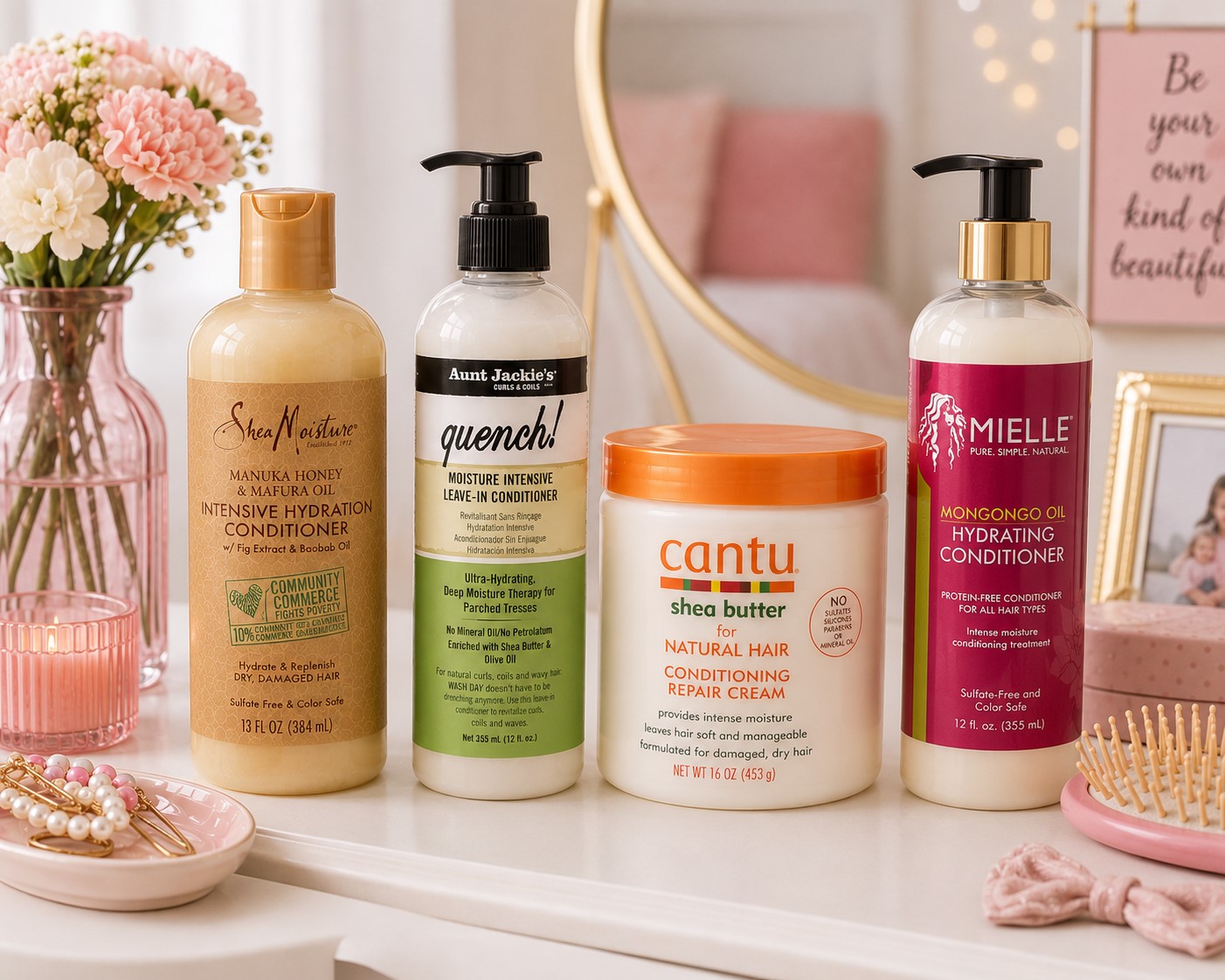
SheaMoisture Manuka Honey and Mafura Oil Intensive Hydration Conditioner is one of the most nourishing conditioners available for natural hair.
The combination of manuka honey, mafura oil, and baobab oil delivers deep hydration and leaves type 4 hair feeling incredibly soft and manageable. It also has enough slip to make detangling on wash day significantly easier.
Aunt Jackie’s Quench Moisture Intensive Leave-In Conditioner works as both a rinse-out and a leave-in conditioner for natural hair. It is packed with shea butter, olive oil, and island mango butter.
The slip it provides makes detangling much easier and the moisture it adds lasts well beyond wash day.
Cantu Shea Butter for Natural Hair Conditioning Repair Cream is a deeply nourishing conditioner that works particularly well for type 4 hair.
The shea butter base is rich enough to address serious dryness and the formula is free from sulfates, parabens, and mineral oil.
Mielle Organics Mongongo Oil Hydrating Conditioner is a lightweight but deeply moisturizing option. It works beautifully for type 4A and 4B hair and provides excellent slip for detangling without weighing the hair down.
For children with natural hair, always apply conditioner generously and in sections. Working through the hair section by section ensures every strand gets fully coated.
For more on how to handle natural hair on wash day from start to finish, how to care for natural children’s hair on Little Hair Book covers every step in detail.
Best Conditioners for Children With Curly Hair
Curly hair needs conditioners with good slip for wash day detangling and enough moisture to keep the curls defined and frizz-free between washes.
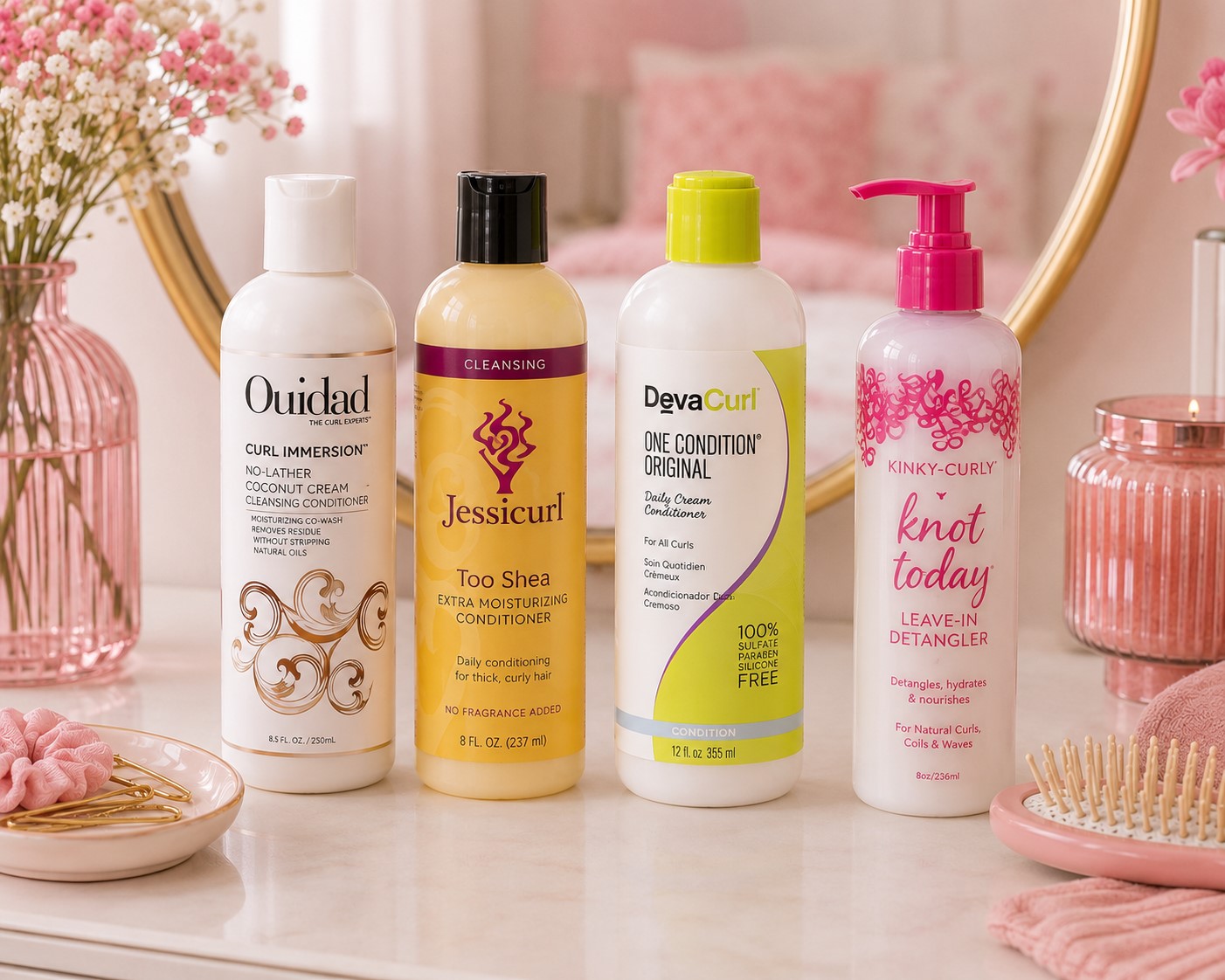
Kinky-Curly Knot Today Leave-In and Detangler is a cult favourite in the curly hair community. Despite being marketed as a leave-in, many parents use it as a rinse-out conditioner too.
The slip is exceptional and it makes detangling curly hair on wash day so much easier. It also enhances curl definition beautifully.
DevaCurl One Condition Original Daily Cream Conditioner is designed specifically for curly hair. It is silicone-free, has excellent slip for detangling, and leaves curls feeling soft and defined after rinsing.
It works well as both a regular rinse-out conditioner and a co-wash product.
Jessicurl Too Shea Extra Moisturizing Conditioner is a deeply moisturizing option for drier curly hair types.
It contains shea butter and other rich emollients that address serious dryness while still providing enough slip for easy detangling.
Ouidad Curl Immersion No-Lather Coconut Cream Cleansing Conditioner works as a co-wash and conditioner in one. It cleanses gently while conditioning at the same time, making it a great option for curly hair that needs frequent washing but cannot tolerate shampooing every week.
For more on keeping curls moisturized and defined between conditioning sessions, how to care for curly children’s hair on Little Hair Book is a great companion read to this post.
Best Conditioners for Children With Wavy Hair
Keeping Waves Soft Without Weighing Them Down
Wavy hair needs conditioners that are moisturizing but lightweight. Heavy conditioners weigh wavy hair down and make the waves look limp and flat rather than bouncy and defined.
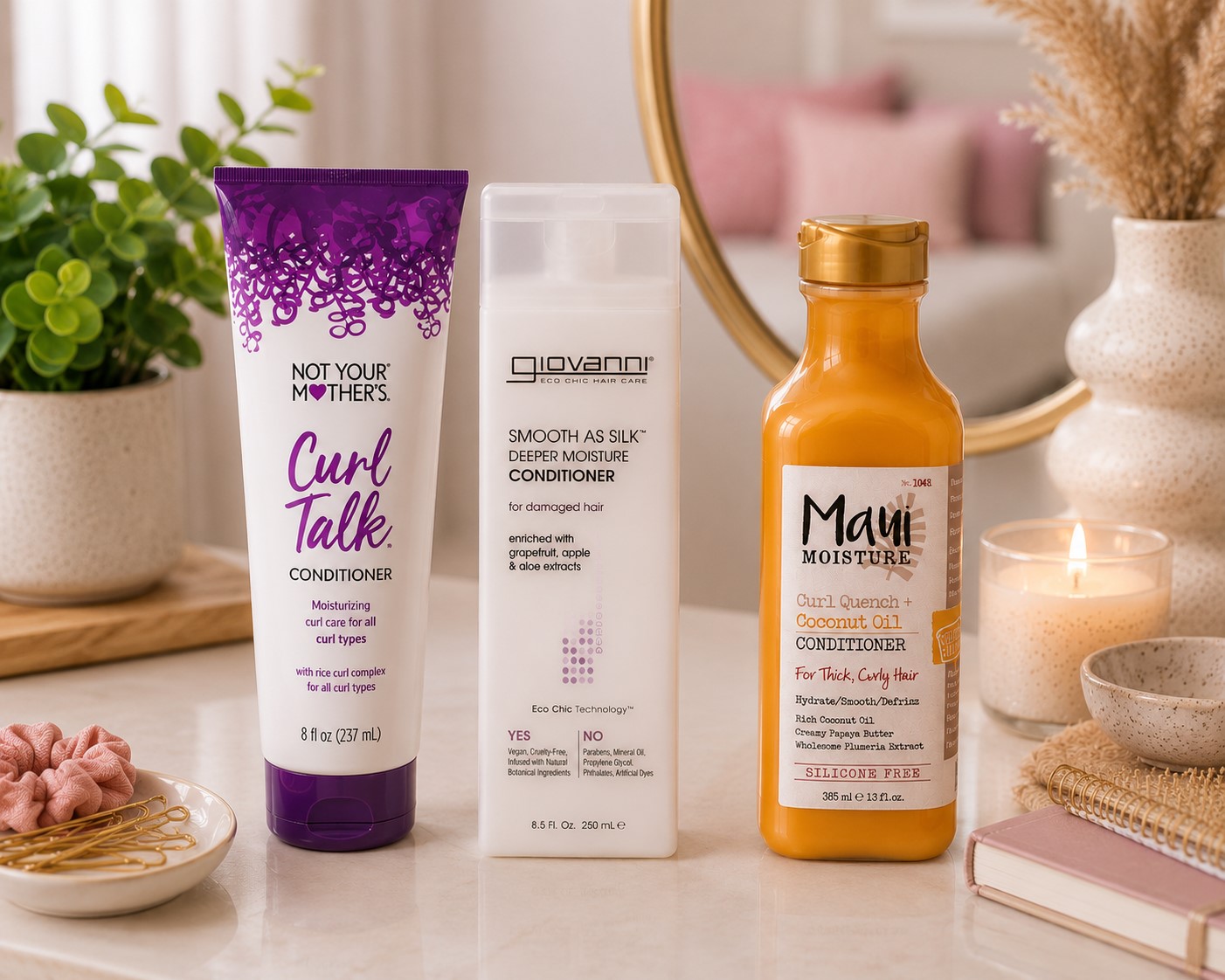
Not Your Mother’s Curl Talk Conditioner is a lightweight moisturizing conditioner that works beautifully for wavy hair. It adds enough moisture to keep the waves soft and defined without being so heavy that it flattens them.
It is also very affordable which makes it easy to use generously without worrying about running out.
Giovanni Smooth as Silk Deeper Moisture Conditioner is a silky, lightweight conditioner that provides excellent slip for detangling wavy hair.
It is sulfate-free and paraben-free and leaves wavy hair feeling smooth and manageable after rinsing.
Maui Moisture Curl Quench and Coconut Oil Conditioner is a coconut oil-based conditioner that works well for wavy to loosely curly hair.
It adds moisture and softness without excessive weight and the coconut oil helps seal in that moisture after rinsing.
For wavy hair, applying conditioner from mid-length to ends is usually enough.
The roots and scalp of wavy hair tend to get oily more quickly than the ends so applying heavy conditioner to the roots can make the hair look greasy faster than usual.
Best Conditioners for Children With Straight Hair
Straight hair needs lighter conditioners that add softness and shine without making the hair look flat or greasy. Because straight hair lies flat and the scalp’s oils travel down the shaft easily, it does not need the heavy moisturizing ingredients that curly or natural hair needs.
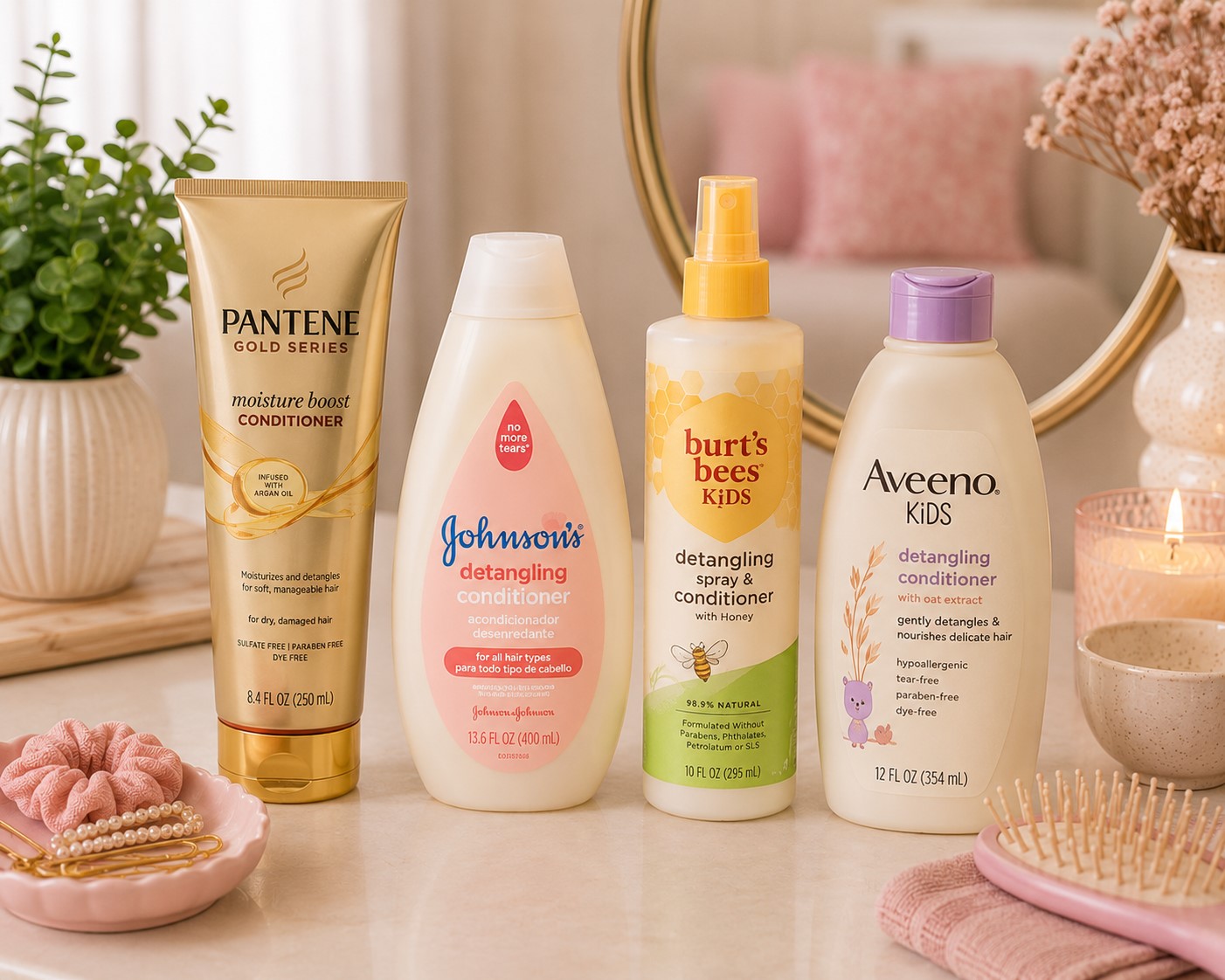
Aveeno Kids Detangling Conditioner is a gentle, lightweight conditioner that works beautifully for children with straight hair.
The oat-based formula adds softness and makes detangling after washing much easier. It is also very gentle on sensitive scalps.
Burt’s Bees Kids Detangling Spray and Conditioner is a two-in-one option that works as both a rinse-out conditioner and a detangling spray. It is lightweight, gentle, and very easy to use. A great option for younger children with fine straight hair.
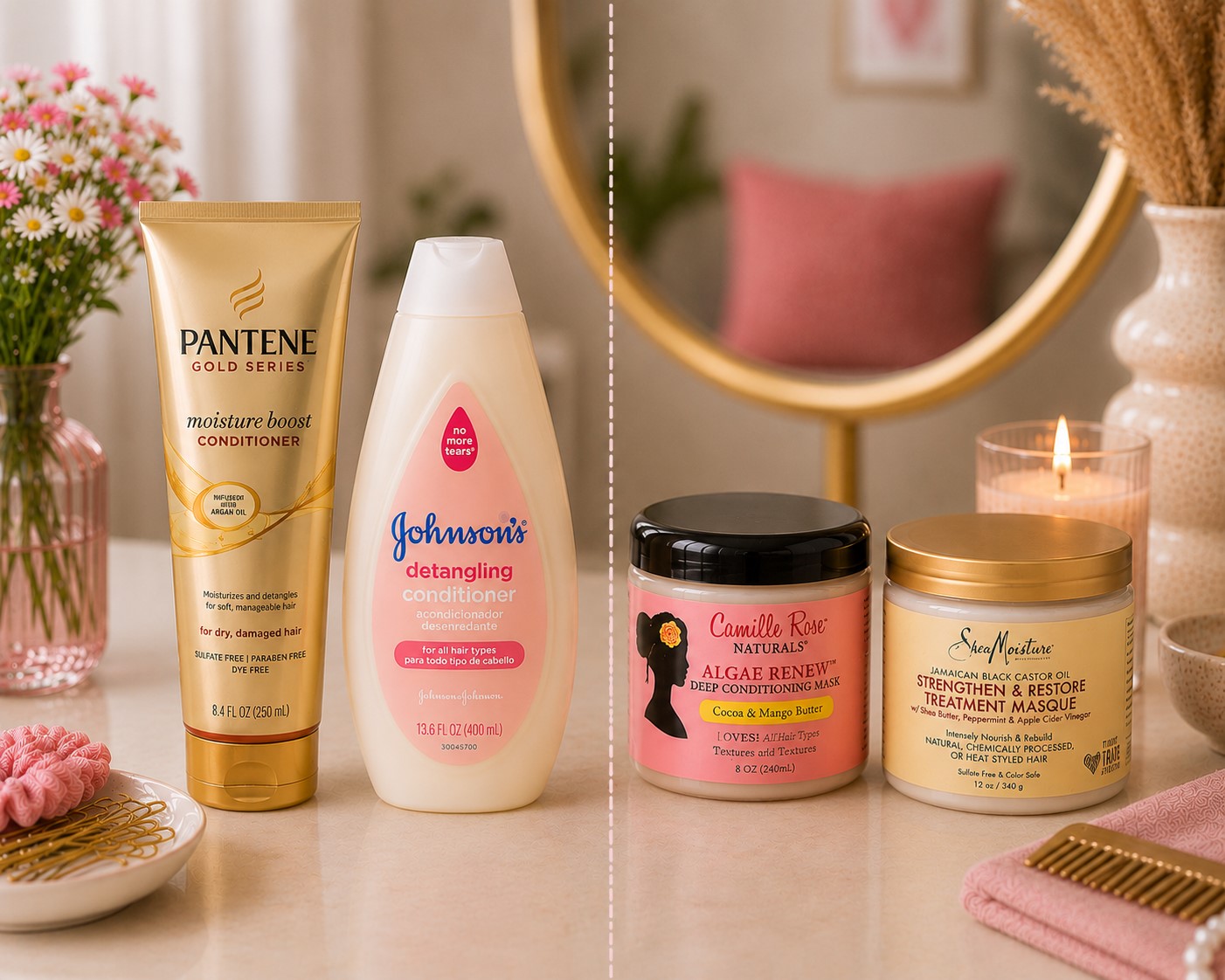
Johnson’s Detangling Conditioner is an affordable and widely available option that does a good job on straight children’s hair.
The formula is gentle and tear-free which matters for younger children who do not always cooperate during hair washing.
Pantene Gold Series Moisture Boost Conditioner works well for older children with straight but dry hair.
It is more moisturizing than a basic conditioner and is a good option when straight hair needs a little extra care.
For straight hair, applying conditioner for two to three minutes before rinsing is usually enough. The hair does not need the extended conditioning time that curly or natural hair benefits from.
Best Deep Conditioners for Children
Deep conditioners are in a category of their own and every child benefits from using one regularly regardless of hair type. The difference between a regular conditioner and a good deep conditioner is significant and shows up in how healthy and strong the hair becomes over weeks and months of consistent use.
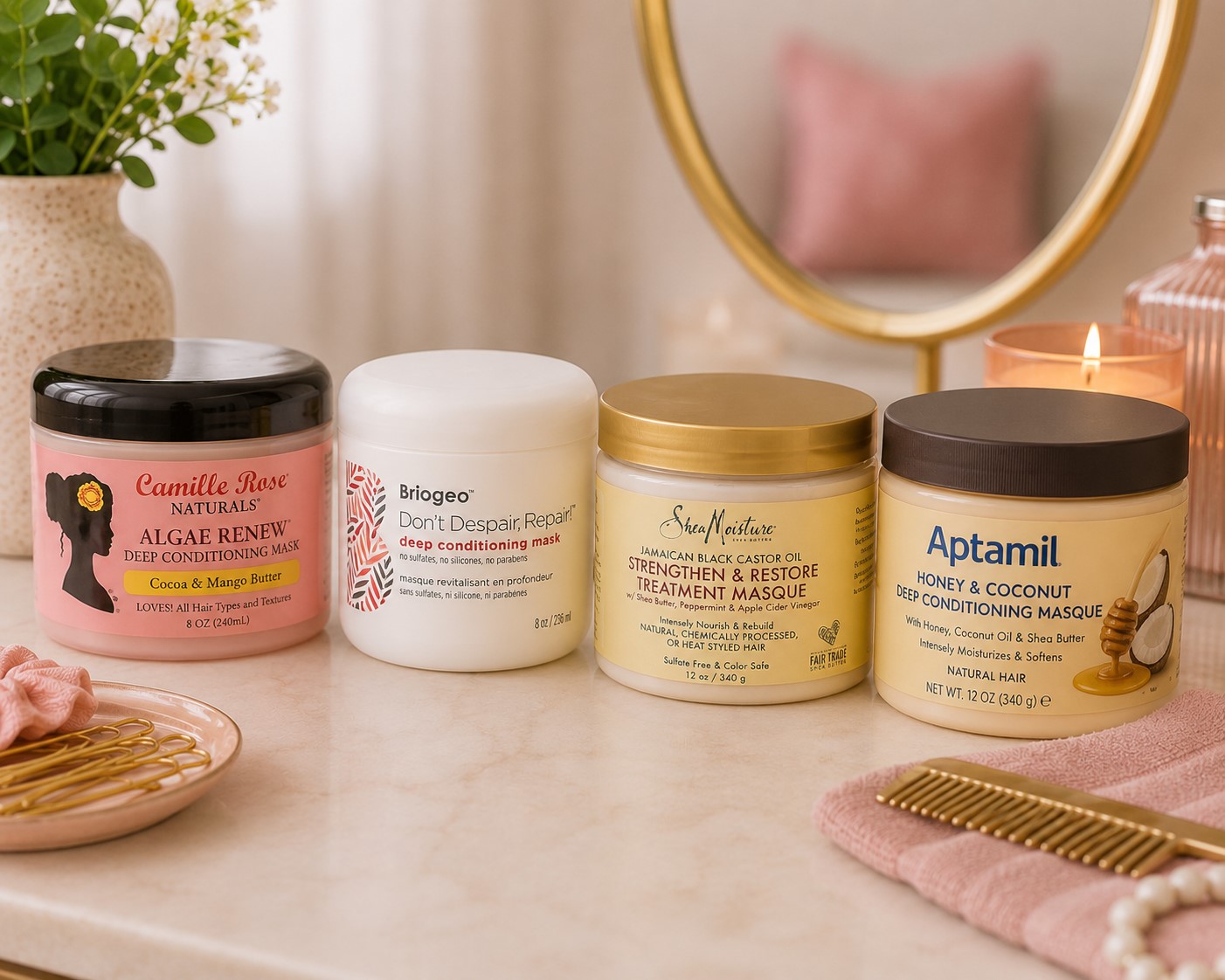
Aptamil Honey and Coconut Deep Conditioning Masque is a rich deep conditioner that works across most hair types.
The honey is a natural humectant that draws moisture into the hair and the coconut oil seals it in.
Leaving it on for thirty minutes under a plastic cap delivers genuinely transformative results for dry or damaged hair.
SheaMoisture Jamaican Black Castor Oil Strengthen and Restore Treatment Masque is one of the most popular deep conditioners for natural and curly hair.
The jamaican black castor oil strengthens the hair shaft while the shea butter adds deep moisture. It addresses both dryness and breakage at the same time.
Briogeo Don’t Despair Repair Deep Conditioning Mask is a protein-based deep conditioner that works well for all hair types including straight hair. It strengthens weakened hair, adds moisture, and improves elasticity.
A great option for children whose hair has been breaking or looking thin.
Camille Rose Naturals Algae Renew Deep Conditioning Mask uses blue green algae and avocado as its primary ingredients.
It is deeply nourishing and works particularly well for type 4 hair that needs intensive moisture replenishment.
For a breakdown of how to incorporate deep conditioning into your weekly wash day routine, weekly hair care routine for children on Little Hair Book maps out exactly when and how to use your deep conditioner each week.
How to Get the Most Out of Your Conditioner
Even the best conditioner will underperform if it is not used correctly. Here are a few things that make a real difference.
Apply to soaking wet hair: Conditioner distributes better and penetrates more effectively when the hair is fully wet. Do not let the hair dry out between shampooing and conditioning.
Apply generously: Using too little conditioner means the hair does not get enough slip for detangling and not enough moisture to last beyond wash day. Be generous especially with children who have thick or natural hair.
Work in sections: Divide the hair into sections and apply conditioner to each one separately. This ensures every strand gets fully coated rather than just the outer layer of the hair.
Use heat: Covering the hair with a plastic cap and sitting under warmth for fifteen to thirty minutes makes even a regular rinse-out conditioner work more effectively. The heat opens the cuticle and allows the conditioning ingredients to penetrate deeper.
Detangle while the conditioner is in: This is the easiest time to detangle because the slip from the conditioner lets the comb or fingers glide through the hair without pulling.
Always detangle during conditioning rather than after rinsing, for a full guide on detangling technique, how to detangle children’s hair on Little Hair Book walks through every step.
Rinse with cool water: Cool water closes the hair cuticle after conditioning which seals in the moisture and leaves the hair looking shiny and feeling smooth. It makes a noticeable difference in the final result compared to rinsing with warm water.
Final Thoughts on Choosing the Right Conditioner
Conditioner is not an optional extra. It is one of the most important products in your child’s hair care routine and choosing the right one for their specific hair type is worth the extra thought and investment.
Start with a good rinse-out conditioner that matches your child’s hair type and use it every single wash day without exception.
Add a deep conditioner to your routine once a week or every two weeks and pay attention to how the hair responds over time.
The right conditioner will show up in softer, stronger, more manageable hair within just a few weeks of consistent use.
As you continue building out your child’s complete product lineup, the next step after washing and conditioning is making sure the hair stays moisturized between wash days. And the product that bridges that gap better than anything else is a good leave-in conditioner. Best leave-in conditioner for children on Little Hair Book is the perfect next read.

